
Buying a car at auction is appealing both for the promise of low prices and the adrenaline of the auction itself. The principle is simple: a vehicle is offered, buyers bid against each other, and the last person to raise their hand walks away with the lot. But between the initial price displayed and the actual cost once the keys are in hand, the difference can be surprising.
Hidden Fees When Buying a Car at Auction
The amount awarded by the auctioneer is never the final amount. This is the most common trap for first-time buyers, and the one that competitors address the least in detail.
Several lines of fees are added to the auction price. The commission from the auction house varies from platform to platform. Some add processing fees, and VAT applies to these fees. According to AllAboutCars, platforms like Agorastore charge between 13 and 15% in additional fees on top of the bid.
Take a vehicle sold at a modest price. Add the commission, processing fees, VAT on these fees, and then the cost of transport if the vehicle is in another region. The total cost can exceed the auction price by more than a quarter. Before bidding, list each item:
- The commission from the auction house or online platform, often expressed as a percentage of the auction price
- Fixed processing fees, varying by the organizer of the sale
- Transport or towing if the vehicle is not running or is far from you
- The registration fee, which includes a regional tax related to the fiscal power, a management fee, and a routing fee
Comparing only the starting price with the Argus rating makes no sense if you forget these items. Check the catalogs on encheres-voitures.fr to spot the pricing conditions specific to each sale and assess the actual profitability of a bid.
Technical Inspection and Actual Condition of the Vehicle: What to Check
You’ve spotted a sedan at an attractive price in an auction catalog. The technical inspection is attached, everything seems in order. Why worry?
Because the technical inspection is not a complete mechanical assessment. It checks compliance with regulatory requirements at a given moment, but says nothing about the condition of the engine, transmission, or battery. A car can pass the technical inspection and break down two weeks later.
For a vehicle over four years old sold to a private individual, the technical inspection report must generally be less than six months old. If this document is missing, the purchase remains possible for a professional, but a private individual may not be able to register the vehicle immediately.
Points to Inspect Beyond the Technical Inspection
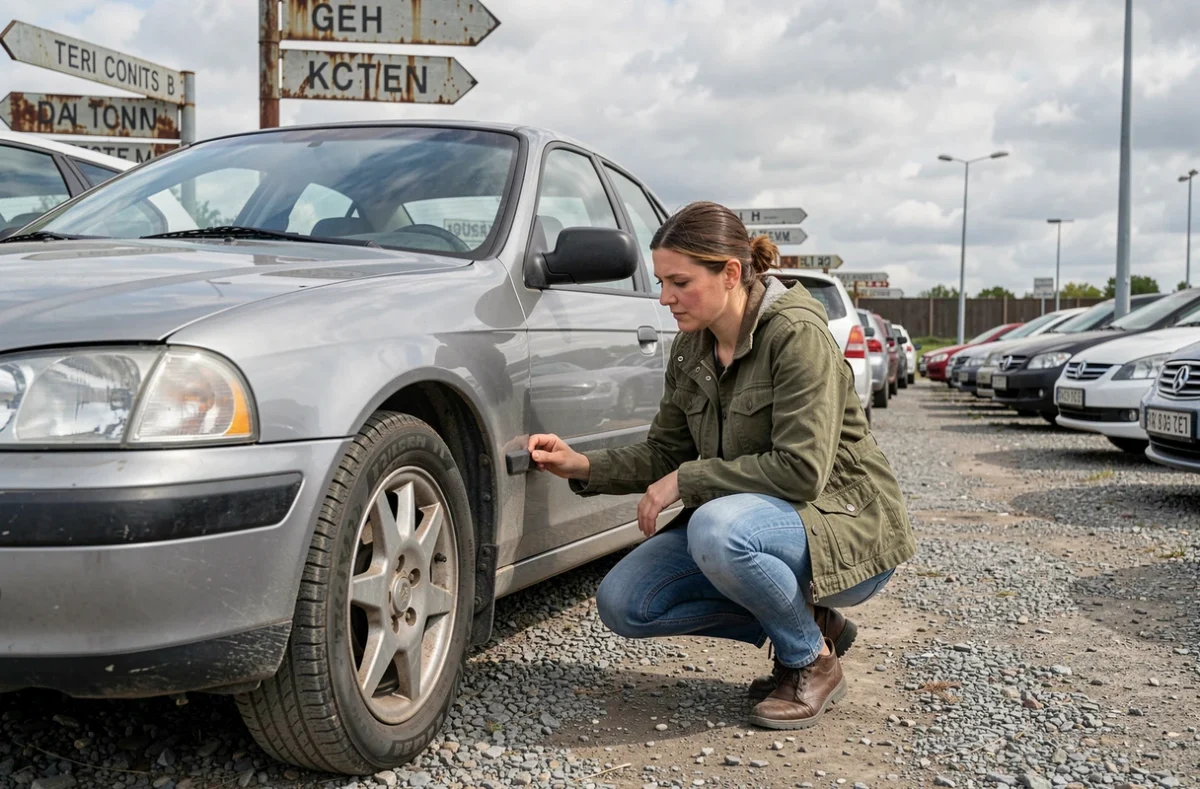
Auctioning does not always allow for a road test. Visual inspection then becomes crucial. Open the hood and look for signs of leaks, check fluid levels, inspect the tires and brakes visually. The absence of a road test makes the static examination of the vehicle decisive.
The bodywork also deserves close attention. Poorly done paint touch-ups, worn door seals, or damp carpeting can reveal a history of accidents or a sealing problem. The purchase is made as-is, with no simple recourse if a defect appears after the auction.
Maximum Budget and Bidding Discipline
Have you ever watched two bidders engage in a battle over a lot? The price climbs every second, and one of them ends up paying more than the market value. This phenomenon has a name in behavioral psychology: escalation of commitment.
Set a firm ceiling before the sale and never exceed it. This ceiling should include the maximum auction price, fees, transport, and registration. Write this number down, and leave the room (or close the tab) as soon as it is reached.
Attending several sales without bidding is a piece of advice often given but rarely followed. Observing the pace of an auctioneer, the speed of online bidding, and how professionals behave helps to understand the mechanics before diving in.
Online Auctions or In-Person: What’s the Difference for the Budget?
In-person, emotion and atmosphere drive up bids. Online, the risk is different: auctions can last several days, and the temptation to return and increase your bid is strong. Budget discipline is just as important online as it is in person.
Some platforms offer auctions with reserve prices (a threshold below which the vehicle is not sold). Others operate without reserve, which can lead to real bargains, but also to less attractive lots where competition is fiercer.

Registration Formalities After a Car Auction
The auction award is not enough to drive legally. The administrative formalities are the same as for any used car purchase, with no derogatory regime.
The buyer has one month to request the registration certificate. The seller must declare the transfer within fifteen days. The file includes the transfer certificate, a valid technical inspection (for applicable vehicles), an ID, and proof of residence.
Regarding insurance, the vehicle must be covered as soon as possession is taken. If you cannot drive it immediately (transport planned, repairs to be made), at least third-party insurance remains mandatory to cover parking.
A final often overlooked point: check the number of keys provided and the existence of a maintenance booklet. These elements are not always mentioned in the catalog, and obtaining them afterward can be costly, especially for recent models with electronic keys.