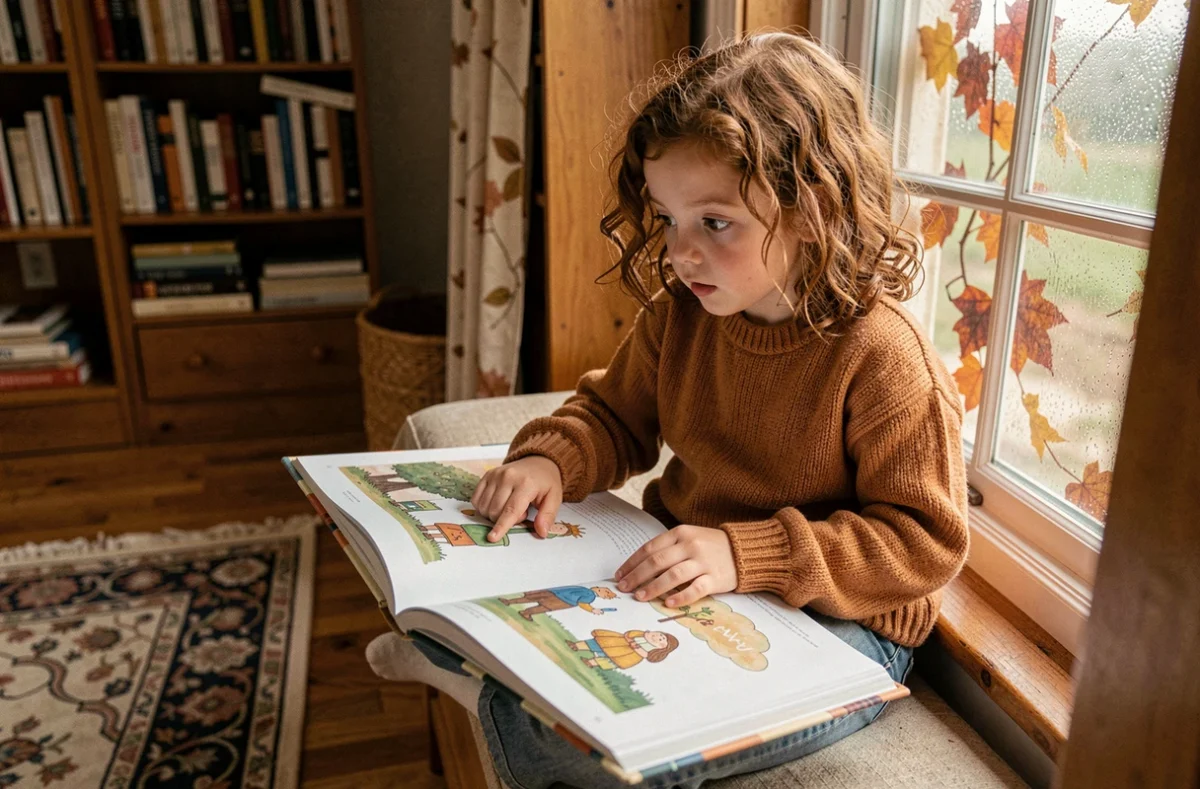
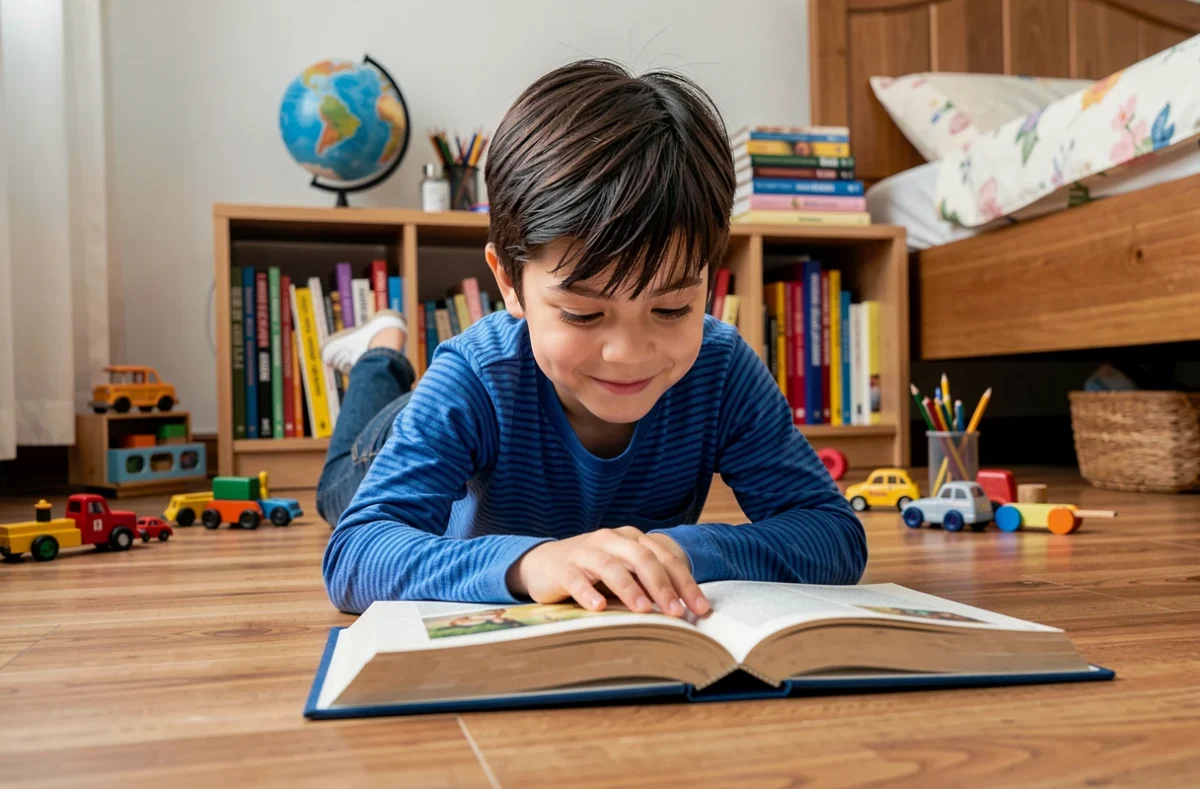
A love of reading tends to fade over the course of middle school, and the decline in recreational reading particularly affects teenagers. Choosing a story based on a child’s age, preferred format and interests is the most direct way to maintain their connection with stories, well beyond the early years.
How to choose a children’s story based on reading stage
A five-year-old and an eleven-year-old preteen don’t lose interest for the same reasons. The younger child loses the thread when a story exceeds their attention span. The older child gives up when the text no longer speaks to them because the characters, themes or tone feel too childish.
Matching a story to a child’s reading stage matters more than the age printed on the cover. A seven-year-old who is still decoding words slowly will get more out of a picture book rich in visual storytelling than a 100-page first novel. Conversely, a fluent eight-year-old reader will be bored by overly short sentences and predictable plots.
Three practical factors can guide your choice:
- The length of the text and the amount of storytelling per page, which should match the child’s actual attention span, not a standard age bracket.
- The story’s emotional tone: a child going through a period of anxiety may connect more with a tale in which the protagonist overcomes a recognizable fear than with an epic adventure lacking an emotional anchor.
- The level of reading independence: shared read-alouds, supported reading and reading alone in silence all call for very different kinds of texts.
Among the children’s stories from Histoire D’Enfant, this approach of progressing by reading stage is reflected in how the stories are organized, making it easier to match a child with a text suited to their actual level.
Podcasts, TV series and friends: taking stories beyond the book
Digital media use isn’t simply a matter of choosing between screens and books. A child listening to a narrative podcast uses the same comprehension skills as a reader: anticipation, inference and the creation of mental images. Audio doesn’t replace reading, but it can rekindle a child’s desire to read after they’ve lost interest.
Podcasts can open the door to written texts when children can explore the same world in book form. Children’s TV series adapted into short novels or comic books use the same mechanism of narrative familiarity.
Recommendations from friends become increasingly influential from the age of nine or ten. Children are more likely to read a book a classmate has told them about than one suggested by an adult. This kind of social recommendation helps explain the success of certain children’s series, which spread from playground to playground regardless of how parents perceive their literary merit.
Combining formats without ranking them
Insisting that print books are better than audio or screens can discourage a child who is developing a relationship with stories through a different medium. The goal is to build bridges between formats: listen to a story on a podcast, then find the written version; watch a series adapted from a novel, then go back to the original text.
Moving between formats keeps children immersed in stories. It works best when an adult supports the transition without forcing it.
Classic fairy tales and contemporary stories: finding the right balance for your family
The fairy tales of Hans Christian Andersen, Perrault and the Brothers Grimm remain important touchstones. Their strength lies in universal archetypes—the quest, the trial, the transformation—that children intuitively recognize. Classic fairy tales provide a narrative framework that children can later use to make sense of more complex stories.
The risk is sticking exclusively to the classics. A ten-year-old who reads nothing but fairy tales may come to see reading as an activity confined to a single genre. Contemporary stories set in familiar contexts—school life, friendships, scientific discoveries and urban settings—provide a necessary counterbalance.
Balancing literary heritage with new discoveries
We recommend building a family reading list that alternates between three types of stories:
- Classic tales read or listened to together, which establish a shared storytelling vocabulary between child and adult.
- Contemporary stories chosen to match the child’s current interests, including genres that are sometimes overlooked, such as humor, children’s science fiction and mysteries.
- Texts discovered by the child themselves through friends, a library or an online platform, without routine parental screening.
This third category is what helps readers become independent. A child who chooses their own stories reads more than a child who is assigned every title.
Libraries and shared reading: an underrated resource
Families’ continued use of libraries reflects an ongoing need for personal guidance around books.
Children’s librarians offer something that neither algorithms nor parents can provide in quite the same way: personalized recommendations based on a conversation with the child. A child who explains what they liked about a book can get a suggestion tailored to their actual tastes, rather than a statistical average.
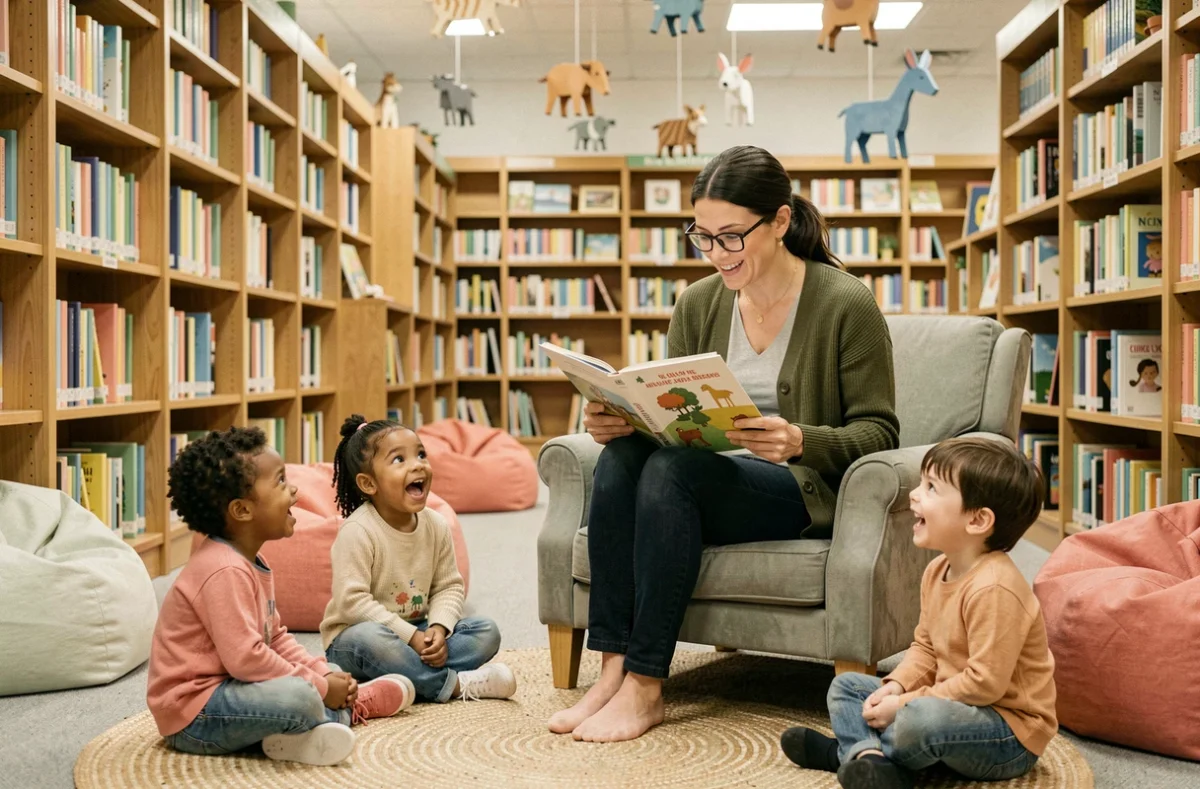
Shared reading sessions at libraries offer another benefit. They let children hear a trained adult reader, whose pacing and intonation enrich their understanding of the text. For a child who isn’t yet a fluent reader, listening to stories helps lay the groundwork for reading independently.
Access to books and reading habits depend as much on a family’s circumstances and opportunities to read as on the books available. Offering captivating stories isn’t enough if a child has no dedicated time, quiet place or someone to talk about them with. A love of reading in children is built through a steady accumulation of small opportunities, not a single decision.