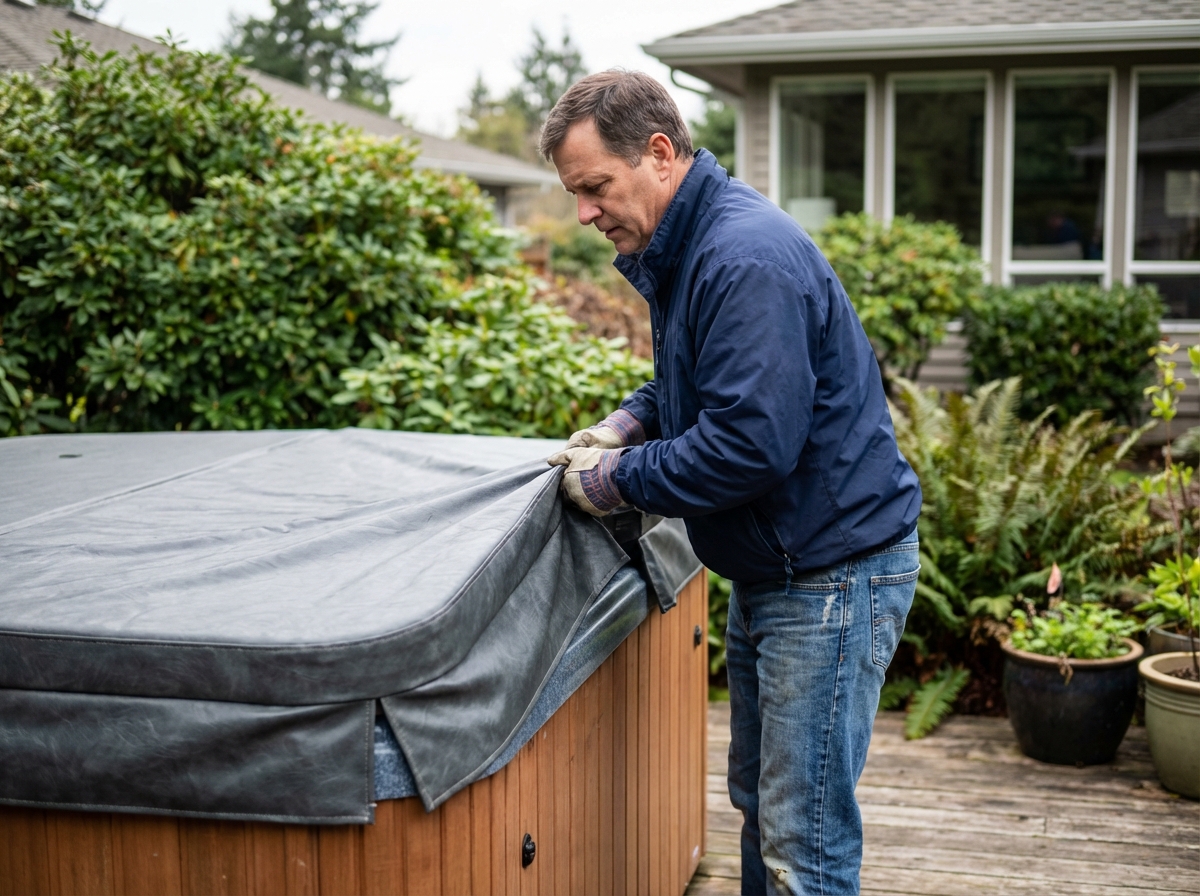
A standard cover is not always enough to preserve the integrity of a spa exposed to the elements. Even high-end models can have flaws when faced with heavy rain or sudden temperature changes. Some accessories marketed as “all-weather compatible” lose their effectiveness after a few months of use.
The most common mistakes relate to the choice of protective materials, maintenance frequency, and winterization management. Practical solutions exist to prevent premature damage and extend the lifespan of the equipment, provided one knows the best practices and the devices suited to each situation.
Why does rain threaten the longevity of your spa?
The protection of the spa against the assaults of the sky is no mere formality. When rain falls, it does not just wet the surface: it seeps in, attacks, and wears down. The wood absorbs water, eventually warping or losing its original color, while the resin fades and becomes fragile. Humidity invades every crevice, altering the water quality and promoting the growth of algae, mold, or limescale.
The technical components are not spared. The motor, pump, and heating system experience accelerated wear due to humidity. The internal pipes also end up oxidizing. Even spas designed for outdoor use, including inflatable models, see their lifespan reduced if protection is not in place.
As soon as a downpour occurs, the water carries with it debris, dead leaves, pollen, and insects into the tub. Filtration becomes clogged, treatment becomes less effective, and the outer structure weakens. Temperature fluctuations, followed by frost or snow, exacerbate micro-cracks and accelerate material deformation.
To keep your spa in good condition, it is important to react as soon as the first rains fall. A well-chosen spa cover, securely fastened against gusts, as explained in the CCOPF guide, becomes the first barrier against water infiltration and debris accumulation. This way, the performance of the outdoor equipment is preserved while ensuring water clarity, and premature wear that threatens the installation is avoided.
What concrete solutions are there to keep a spa safe from the elements?
To effectively protect your spa, there are several options to combine depending on the configuration and usage.
The spa cover remains the first line of defense. An insulated or thermal cover limits heat loss, protects the water from impurities, and slows evaporation. Reinforced or rigid versions withstand wind better and can sometimes bear snow without flinching. If the spa is not used year-round, a protective cover or tarpaulin adds extra protection against rain, sunlight, and falling leaves.
Installing a spa shelter changes everything. A pergola, a gazebo, or a protective dome: each solution has its advantages. A pergola equipped with side screens allows for adjusting protection according to the weather. The dome, on the other hand, forms a cocoon that effectively preserves heat and blocks gusts.
For inflatable models, a ground mat insulates the structure and prevents moisture from rising. One should not neglect the securing of accessories: strong straps or fasteners keep the cover firmly in place, even when the wind picks up.
Here are the devices to prioritize for enhanced protection:
- Choose a thermal spa cover perfectly suited to the shape of the basin.
- Opt for a protective cover that can withstand UV rays and rain.
- Plan for a fixed or removable shelter, depending on how often the spa is used.
The CCOPF guide details, point by point, how to secure each protection system. With this method, one ensures a peaceful use of their spa, regardless of the whims of the sky.
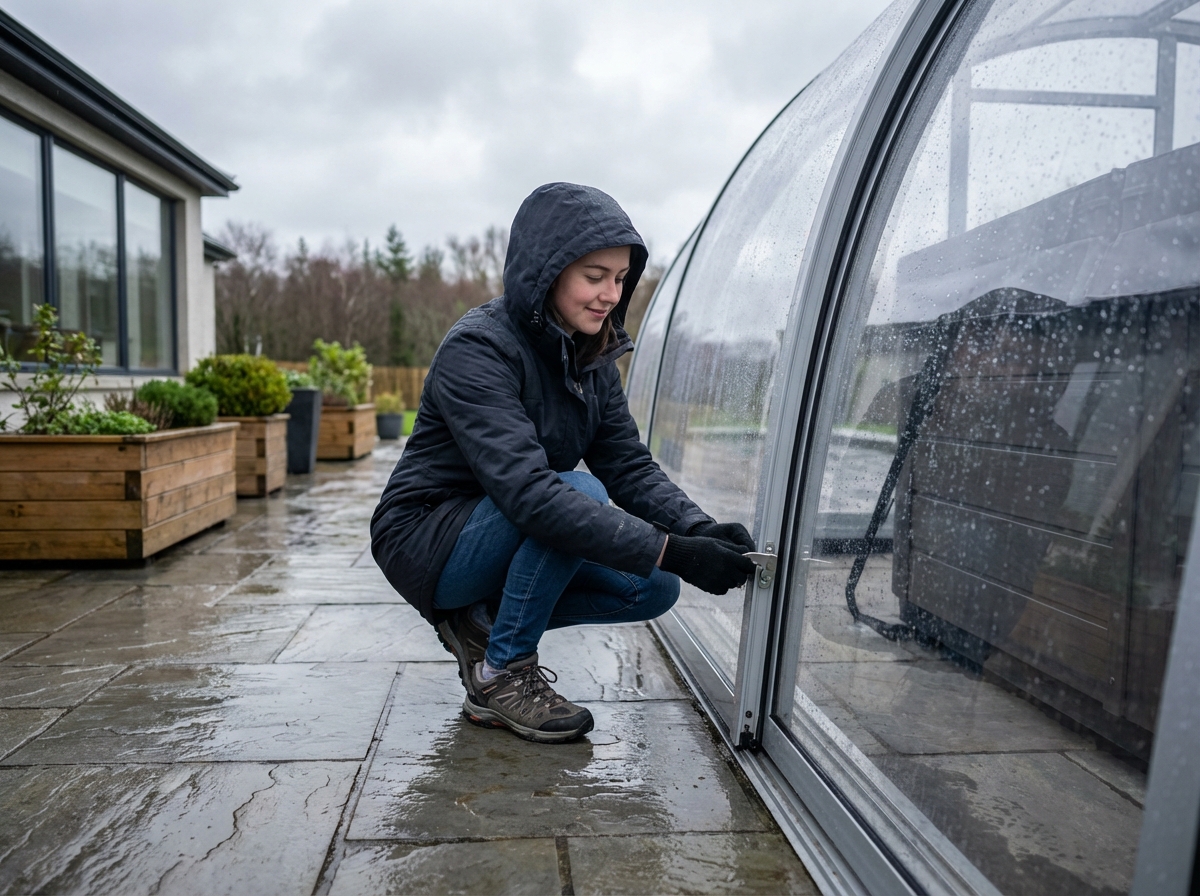
Common mistakes and tips for a successful winterization of your spa
Missteps to avoid during winterization
Neglecting the complete drainage exposes the structure to real damage. Standing water, trapped in ice, causes cracks and breaks in the lining or pipes. The filter, often overlooked, can become a breeding ground for bacteria, even if the spa remains unused.
Another point of vigilance: electrical protection. Any installation must comply with the NF C 15-100 standard: differential circuit breaker, waterproof box, secure wiring. Too many installations overlook these elements, while humidity and frost increase risks.
To secure winterization, a few actions make all the difference:
- Ensure that the spa cover closes perfectly to prevent evaporation, block debris intrusion, and secure access for young children or pets.
- Install insulating sleeves on the pipes to prevent frost from causing damage.
- Use bromine or active oxygen to keep the water healthy over time, even during winter.
Leaving the heating running continuously without supervision is never advisable. Installing a backup heater with a thermostat allows for maintaining a stable water temperature while preserving the durability of the entire system, even when the spa is not in use. Managing winterization rigorously ensures that you find a spa ready for use in spring, without unpleasant surprises or costly repairs.
Ultimately, protecting your spa is about ensuring peace of mind: constant vigilance, a few proven reflexes, and the promise of diving into clear water as soon as the nice days return.