In France, wearing a green dress at a wedding has long been considered a gesture of bad luck. Some families still impose this rule, even though others now tolerate the color without batting an eye. However, in other countries, green is displayed fearlessly on the fabrics of guests or the newlyweds.
Dress codes vary by region, era, and social background. From one village to another, the same shade can shift from an absolute prohibition to a mere preference, revealing the porous boundaries between tradition, superstition, and common practice.
Green, a color full of symbols and beliefs in the world of marriage
For centuries, green has held an ambiguous place in wedding ceremonies. Color of nature, hope, renewal, it also evokes fertility and harmony. Yet, in the context of marriage in France and in several parts of Europe, this hue is surrounded by suspicion, even fear. Wearing green at a wedding sometimes exposes one to disapproving glances and whispers. The meaning of green brings bad luck to marriage: this idea permeates conversations, is passed down from generation to generation, and fosters a persistent mistrust.
The roots of these beliefs are lost in oral tradition. For some, green is said to be the color of artists and entertainers, despised by the bourgeois society of the 19th century, which associated this color with instability and carelessness. Others point to the symbolism of “poorly mixed” green in ancient dyes, which were reputed to be toxic, contributing to its reputation as a suspicious color during solemn celebrations.
Nevertheless, the green outfit captivates with its elegance and freshness. Whether a flowing dress or a discreet accessory, it adds a touch of originality without compromising the solemnity of the wedding. Green, caught between tradition, superstition, and the pursuit of happiness, remains a color with a complex identity, oscillating between taboo and refinement. Each family, each region, each guest interprets the limits, customs, and audacity in their own way, thus revealing the richness of the dress codes associated with weddings.
Why is green associated with bad luck? Origins and superstitions explained
The origin of the reputation of green as a color of bad luck is not new. This superstition finds its roots in the heart of the Middle Ages, at a time when achieving a true green on fabrics was a chemical challenge. The pigments used were often unstable, sometimes even dangerous to health. Wearing a green dress to celebrate a wedding meant exposing oneself to uncertainty, to the idea that the outfit, and symbolically the union, might not withstand the test of time.
Suspected of embodying chance, green gradually became excluded from ceremonies. In collective memory, it ended up joining the old superstitions of gambling, fate, and even the black cat. In France, as elsewhere in Europe, this image took hold, fueled by the fear of upsetting luck on the wedding day.
This rejection is not solely explained by the history of dyes. The stories passed down through generations, the advice of elders, and family anecdotes have reinforced the mistrust. As a result, white, pastel, or blue have dominated ceremonies, while green is often relegated to accessories or decoration, far from the main silhouettes. This superstition continues to weigh on outfit choices, woven from memories and habits that persist, even when reason no longer intervenes.
Between tradition and modernity: should we still believe in dress code prohibitions at weddings?
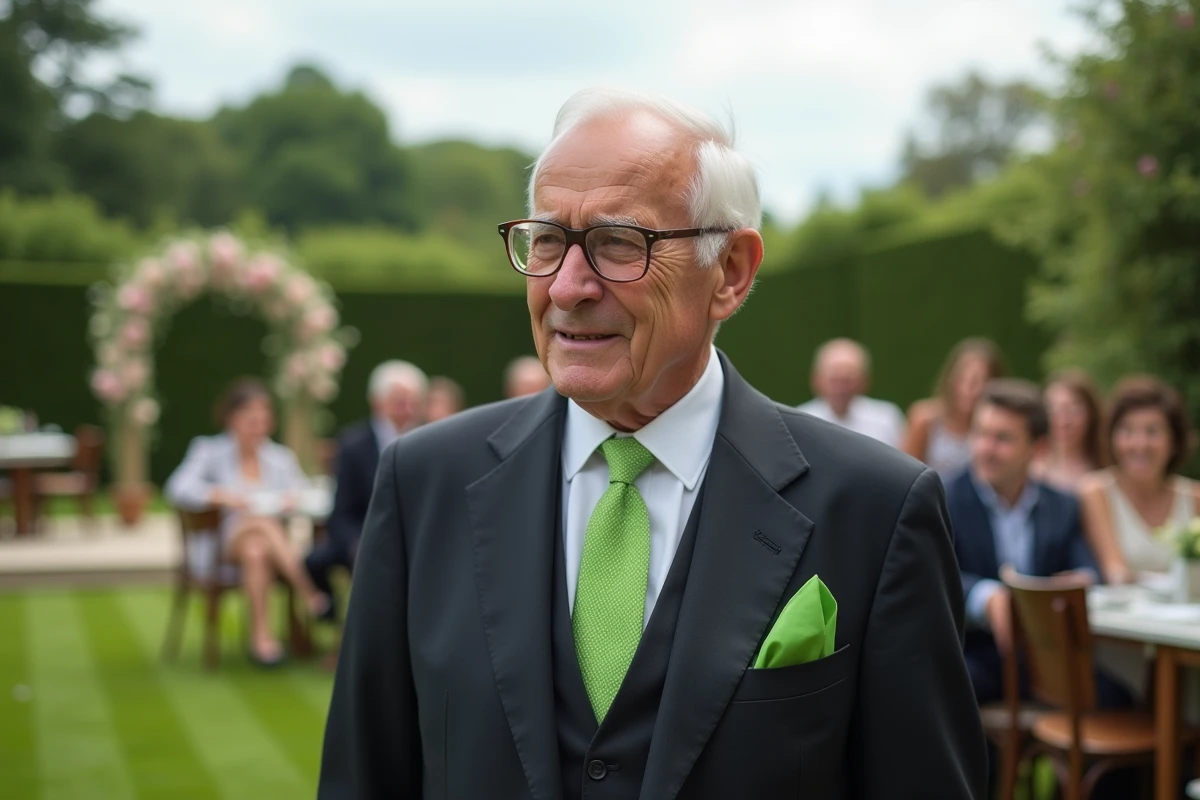
The codes of wedding are evolving quietly. Not long ago, the dress code was inflexible and the green outfit was often banned, accused of bringing bad luck. Today, the rigidity of traditions gives way to more freedom. Guests question, hesitate, and sometimes end up succumbing to the allure of an emerald dress or a pistachio detail. Even the moss suit is timidly finding its place.
Green, long suspected, is beginning to show itself, worn by a generation that honors history but refuses to be bound by it. Old fears are gradually fading in the face of the desire to personalize the celebration, to make the wedding an event that reflects oneself. Hope, freshness, and uniqueness are invited to the wedding table, pushing aside the fear of bad luck.
Between respect for the ritual and self-affirmation
Several trends are emerging today among families and couples. Here are some notable developments:
- The wedding dress in white still takes center stage, but colors are making their entrance, discreetly or not.
- Families oscillate, sometimes torn between loyalty to traditions and openness to individual choices.
- The happiness of the newlyweds becomes the central argument, even if some prefer not to tempt fate by simply avoiding green.
Marriage, far from being fixed, adapts and transforms. Each person charts their own path between respect for rituals and the desire for novelty, between expected elegance and controlled boldness. Green, long in the background, is now invited to the celebration, sometimes discreetly, sometimes vibrantly. It remains to be seen who, at the next wedding, will dare to cross the line and make this color a sign of luck, uniqueness, or regained freedom.