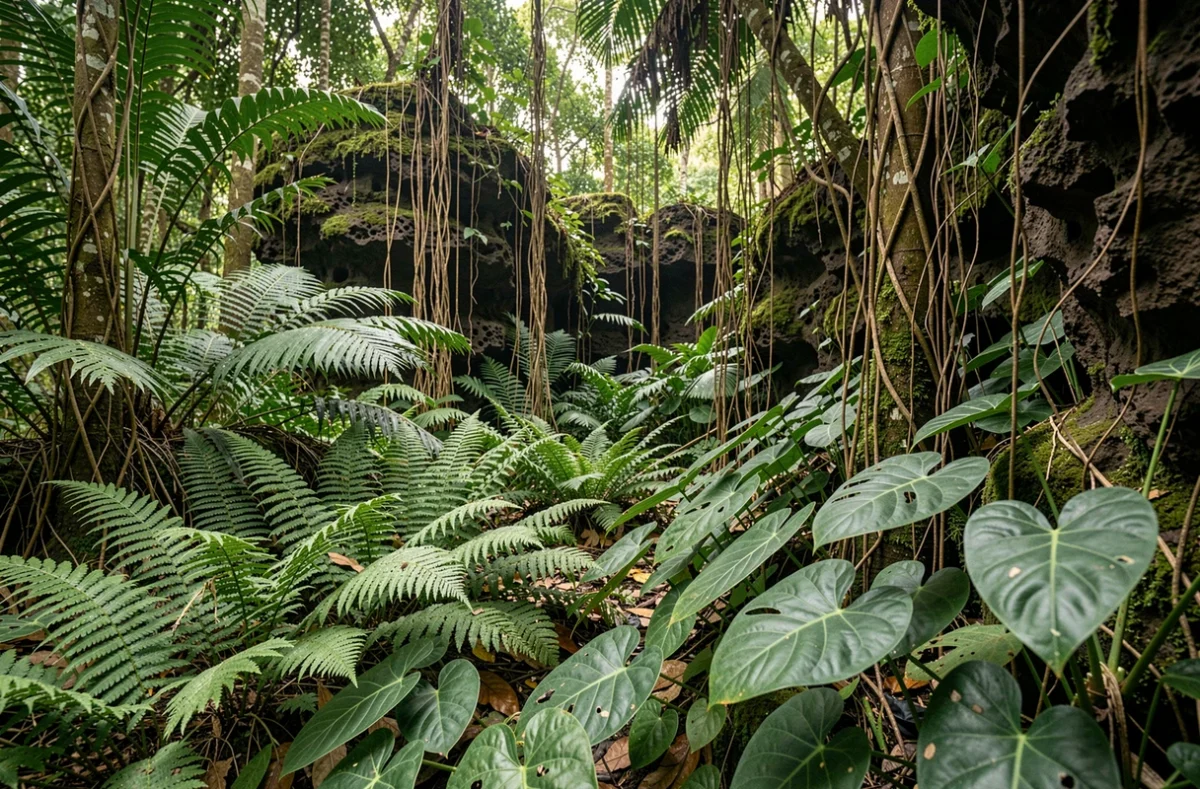
Guadeloupe is known as an island without snakes. Travelers rejoice at this, and tourist guides repeat it. The reality is more nuanced: the archipelago still hosts a few discreet and harmless snakes, some of which may be endemic. The question is therefore not so much about a total absence but rather a spectacular rarity, the causes of which date back several centuries.
Invisible snakes: snakes indeed present in the archipelago
To claim that there are no snakes in Guadeloupe is inaccurate. Several species of snakes still live on certain islands of the archipelago. They are small, non-venomous, and especially very discreet.
Two of these snakes may even be endemic, meaning they are found nowhere else on Earth. Their extreme discretion explains why most residents and visitors never encounter them. This invisibility has ultimately fueled the idea that snakes have completely disappeared.
Understanding why there are no snakes in Guadeloupe therefore requires reframing the question: it is not an absence, but a rarity linked to identified human causes.
European colonization and the collapse of Guadeloupe’s reptiles
Paleontological data tell a very different story than one might believe. Bones of reptiles discovered in caves, where predatory birds nested, allow us to reconstruct the past biodiversity of the archipelago.
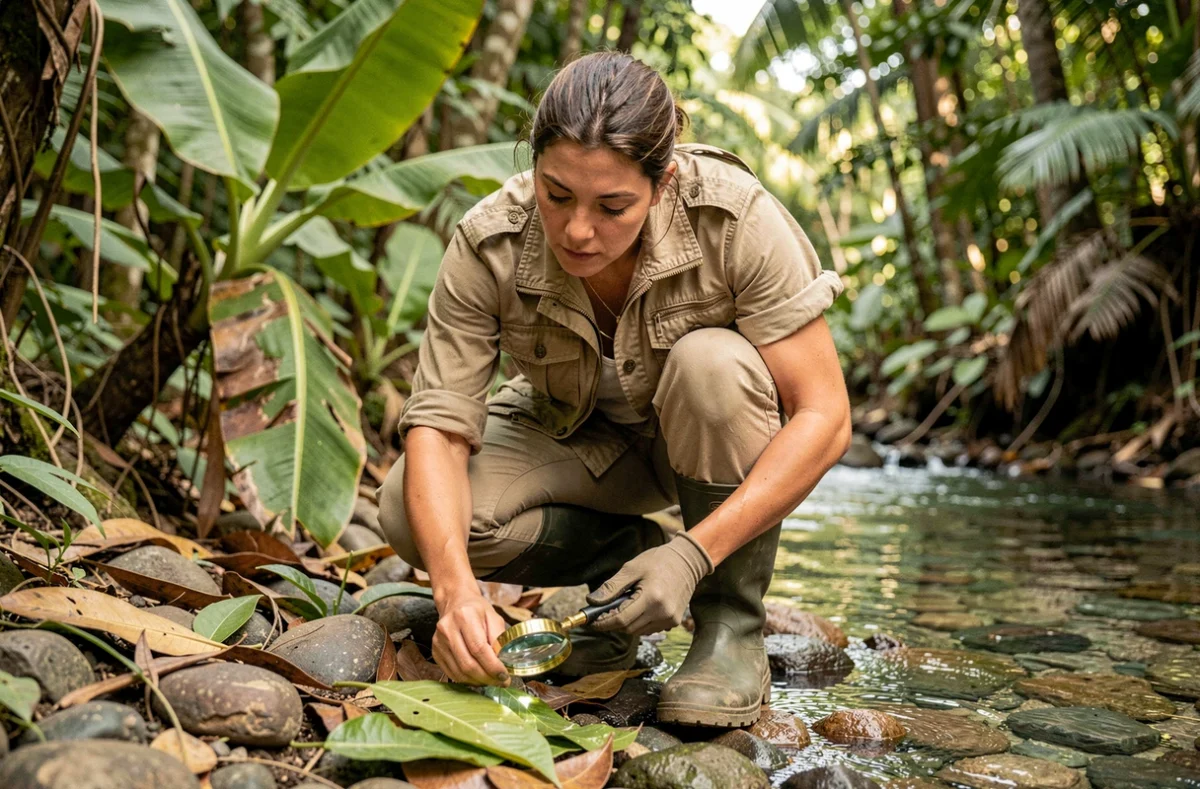
The first observation: the climatic changes of the Pleistocene had little impact on the snakes and lizards of Guadeloupe. These animals survived temperature variations without notable extinction.
The second observation: the settlement of the Indigenous peoples did not cause any extinctions. It even coincided with the probable introduction of two new species, a gecko and an iguana.
The turning point occurred with the arrival of European colonists a few centuries ago. According to a study published in the journal Science Advances (Corentin Bochaton et al., May 2021), between half and more than two-thirds of native reptiles then disappeared. The scale of this extinction is unparalleled compared to anything the archipelago had experienced before.
Introduced predators, the primary factor of disappearance
Why such a brutal collapse? The statistical analyses conducted in this study point to a specific profile of victims. Medium-sized terrestrial reptiles were the most affected, those measuring between fifteen and thirty centimeters.
This profile exactly corresponds to the prey targeted by the predators introduced by Europeans:
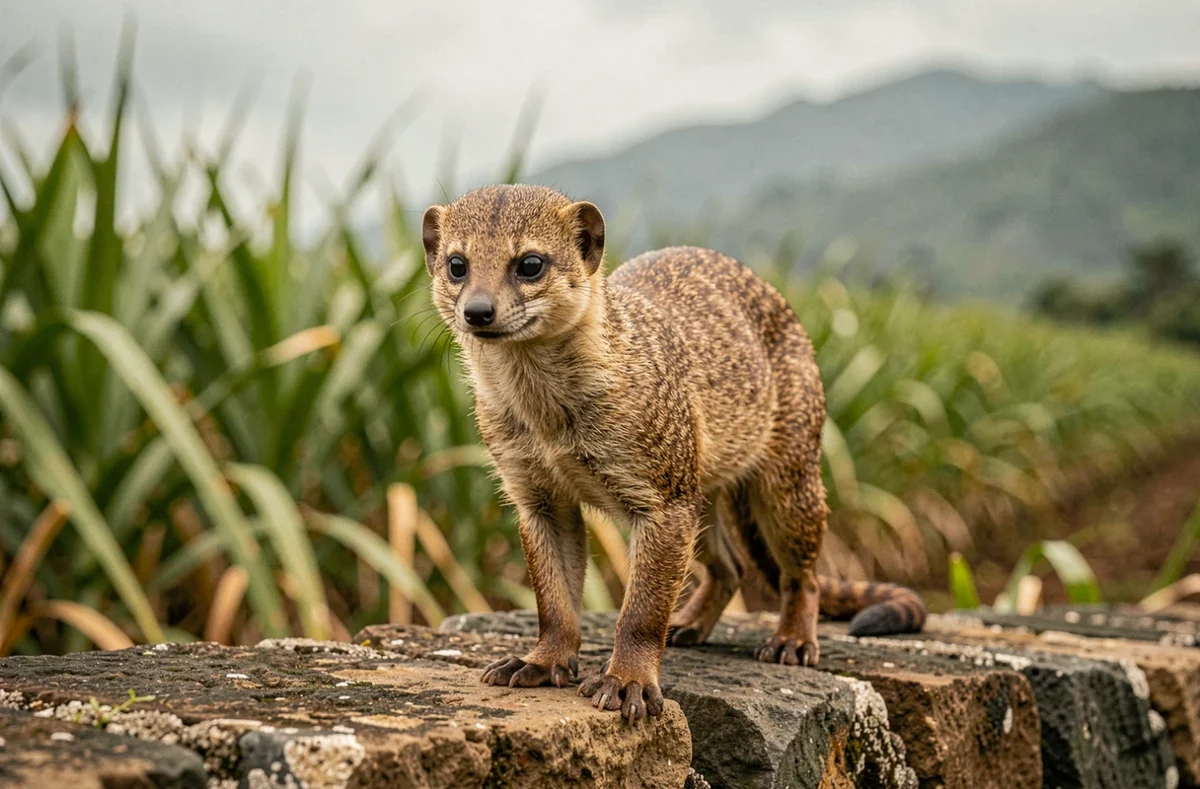
- Mongoose, imported to control snakes in plantations, turned against the entire creeping fauna, including the snakes they were supposed to regulate.
- Rats, arriving inadvertently on ships, feed on the eggs and juveniles of reptiles.
- Feral cats, which have become semi-wild, hunt small lizards and snakes with deadly efficiency.
These predators exerted constant pressure, day and night, on species that had never evolved in the face of such hunters.
Plantations and destruction of natural habitat
Predation does not explain everything. The plantation economy radically transformed the landscape of Guadeloupe. Massive deforestation for sugarcane and other crops destroyed the forest environments where reptiles lived.
A terrestrial snake needs litter, rocks, and underbrush to hide and hunt. When these elements disappear in favor of monocultures, populations collapse even without additional predators. The two combined factors, predation and habitat loss, acted in complementarity.
Introduced species targeted by current conservation programs
You might imagine that the fight against invasive species is limited to rats and mongooses. The Life Rept’Islands program, led by the French Office for Biodiversity, significantly broadens the scope.
This project, scheduled from September 2026 to September 2031, targets seven species of reptiles classified as endangered or critically endangered. It covers the islands of Guadeloupe, Saint Martin, and Saint Barthélemy. The list of introduced animals to control far exceeds the usual suspects:
- Goats, which degrade low vegetation and eliminate natural shelters for reptiles.
- Chickens returned to the wild, which scratch the ground and consume small animals.
- Feral cats, whose impact on island wildlife is documented in many archipelagos around the world.
A national action plan for terrestrial reptiles of Guadeloupe and Saint Martin is announced for the period 2026-2031. It aims to map the actual distribution of surviving snakes, combat introduced species, and change public perception. Because part of the problem remains cultural: many residents view snakes as harmful, even when it comes to harmless and threatened snakes.
Cultural perception and the future of snakes in Guadeloupe
The fear of snakes is not unique to Guadeloupe, but it takes on a particular dimension there. On an island where colonization narratives have associated snakes with danger, the mere sight of a snake can trigger a lethal reaction.
This hostility directly hinders conservation efforts. Protecting a species that the local population perceives as threatening requires long-term educational work. Current programs incorporate this dimension by planning awareness-raising actions for residents and schoolchildren.
The stakes go beyond the mere survival of snakes. Reptiles play a role in regulating insects and in the local food chain. Their gradual disappearance affects the entire island ecosystem, from the birds of prey that feed on them to the proliferation of certain invertebrates.
The snakes of Guadeloupe have not disappeared because the climate or geology prevented them. They have been decimated by imported predators, habitat destruction, and persistent human hostility. The few remaining snakes represent the last link in a once-rich biodiversity, which conservation projects are now trying to preserve before it is too late.