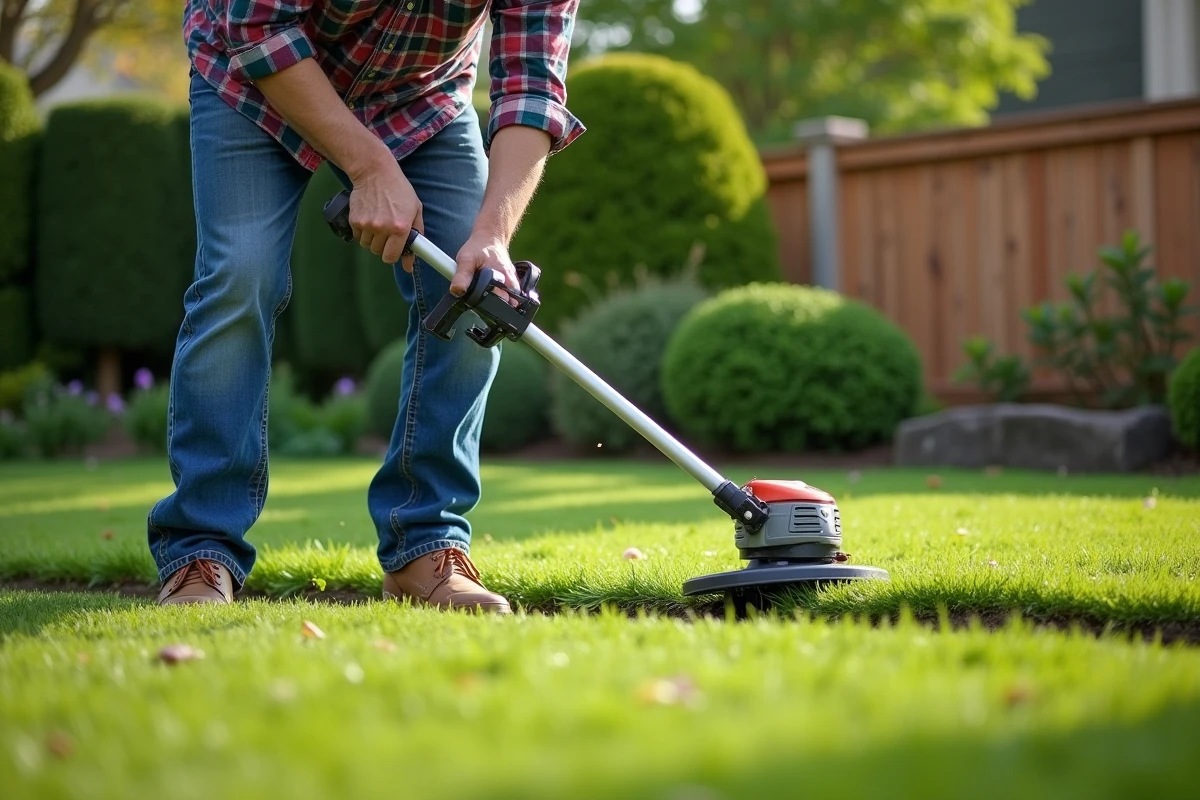
A string trimmer never replaces a brush cutter, even if some models claim otherwise. However, confusion persists in many buying guides, where the two tools are often presented as interchangeable.
The differences in power, maneuverability, and adaptability to types of vegetation directly affect the results obtained, as well as the ease of maintenance of the equipment. Some rarely mentioned technical criteria determine the lifespan of the device and the quality of the work performed. These elements guide the choice towards a tool that is truly suited to the terrain configuration and frequency of use.
Brush cutter or string trimmer: what are the differences for garden maintenance?
Brush cutters and string trimmers do not play in the same league. The former tackles dense terrains, where vegetation thickens, and where tall grasses resist the mower. With its robust motorization, whether gas or electric, it cuts through the thick: brambles, tough regrowth, this model is aimed at those who confront nature head-on. The string trimmer, on the other hand, focuses on precision. Lighter and more maneuverable, it is perfect for defining the sharp edges of a lawn, tending to the borders of flower beds, or perfecting the finish where the mower struggles.
To choose between these two tools, it all starts with the type of work you aim to accomplish. If your priority is finishes, impeccable edges, maintenance around flower beds, and easy access to narrow areas, the string trimmer is essential. Its natural handling, lightweight, and lack of significant vibrations all contribute to a fatigue-free domestic use, even for small areas. Conversely, vast areas overrun with wild grasses demand the power and durability of the brush cutter.
Each tool shows its limits depending on the garden configuration. A space composed of well-maintained lawns and defined flower beds requires finesse and maneuverability. In contrast, a poorly maintained area, overrun by vegetation, necessitates a robust machine ready to tackle uneven terrain and thick regrowth. To help navigate this, coupe-bordure.com provides a detailed overview of models, their characteristics, and preferred uses, guiding each user towards a coherent choice suited to the reality of the terrain.
What criteria should be prioritized to choose the string trimmer suited to your needs?
Certain parameters make all the difference when it comes to choosing a string trimmer that is truly suited to your garden. Motor power, power supply, ergonomics: every detail counts to achieve a clean result and work without constraint. For a medium-sized garden, battery-powered electric models are appealing for their freedom of movement: no more cord to drag around, no need to check the distance to the power outlet. Those working on large areas with frequent regrowth often opt for a gas string trimmer, designed to withstand sustained use.
Another important point: the quality-price ratio. Do not overlook the advertised lifespan of the battery or motor and the availability of easily accessible spare parts. Models equipped with a telescopic handle, a pivoting head, or an automatic line feed system provide a real advantage during long working sessions, especially around flower beds or along paths.
Here are some guidelines to refine your choice among the various options available:
- For domestic use in a small garden, prioritize battery-powered electric models: they are lightweight, quiet, and easy to maneuver.
- If you need to regularly maintain dense lawns or tall grasses, consider a gas string trimmer or a model with high power.
- Think about the length of the power cord if you opt for a corded device: the reach directly influences ease of movement and speed of execution.
A look at a comparative guide is essential to scrutinize the models, examine feedback from discerning users, and choose the tool that best fits the morphology of your terrain and your expectations in terms of comfort or performance.

Focus on essential features for comfortable and effective use
The effectiveness of a string trimmer relies on the intelligence of its features, designed to offer user comfort and precision in finishing work. An adjustable telescopic handle, tailored to each user’s height, changes the game during long sessions. The pivoting head, on the other hand, facilitates access to the edges of flower beds, along pathways, or those often forgotten corners around flower beds.
To better identify the equipment to prioritize, here are the features that enhance the user experience:
- Line feed system: whether automatic or semi-automatic, it ensures a consistent cut and avoids repeated pauses to readjust the line. This detail directly impacts maintenance efficiency.
- Removable battery: for cordless models, the ability to quickly change the battery ensures that work is not interrupted, a significant advantage when maintaining large borders.
- Ergonomic handle: a good grip reduces fatigue, especially during prolonged use on medium surfaces or along long borders. Models designed for domestic use often focus on lightweight construction.
Some string trimmers also emphasize versatility: the pivoting head allows for switching from horizontal cutting to vertical finishing along pathways without cumbersome adjustments. Regularly maintaining borders requires such ease of adaptation, so that the motion remains fluid until the last tuft of grass.
Ultimately, choosing the right string trimmer gives you the opportunity to reshape your garden to your liking, without compromising on precision, comfort, and efficiency. The right tool transforms a chore into a mastered routine, and the garden into a renewed promise with each pass of the blade.