An insulin vial left in direct sunlight on the back seat of a car for two hours can lose all effectiveness. This seemingly trivial situation illustrates a larger problem: the secure transport of medications requires precautions that neither individuals nor professionals can improvise. Temperature, hygiene, traceability—each step of the journey conditions the quality of the product that will end up in the patient’s hands.
Transfer Breaks: The Weak Link in Medication Transport
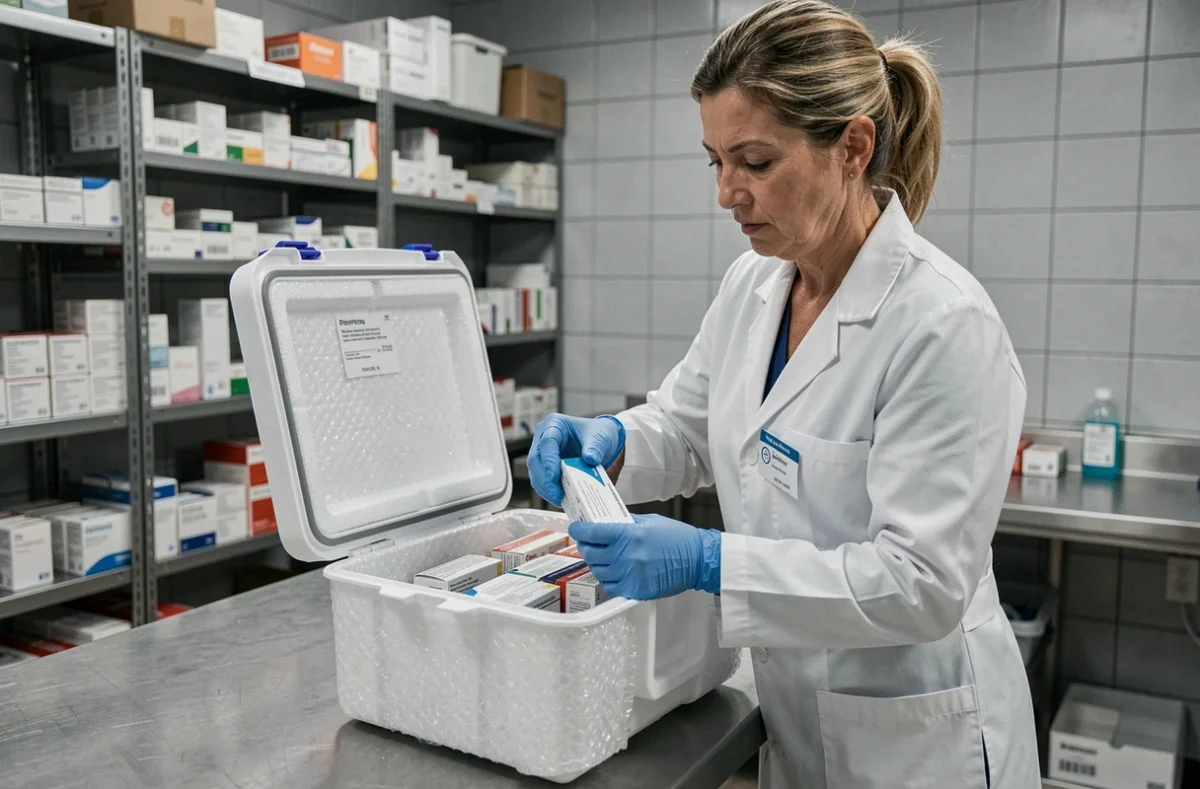
Competitors often talk about the cold chain or regulatory compliance. They less frequently address a specific technical point: transfer breaks. This term refers to every moment when a package changes hands, vehicle, or temporary storage area.
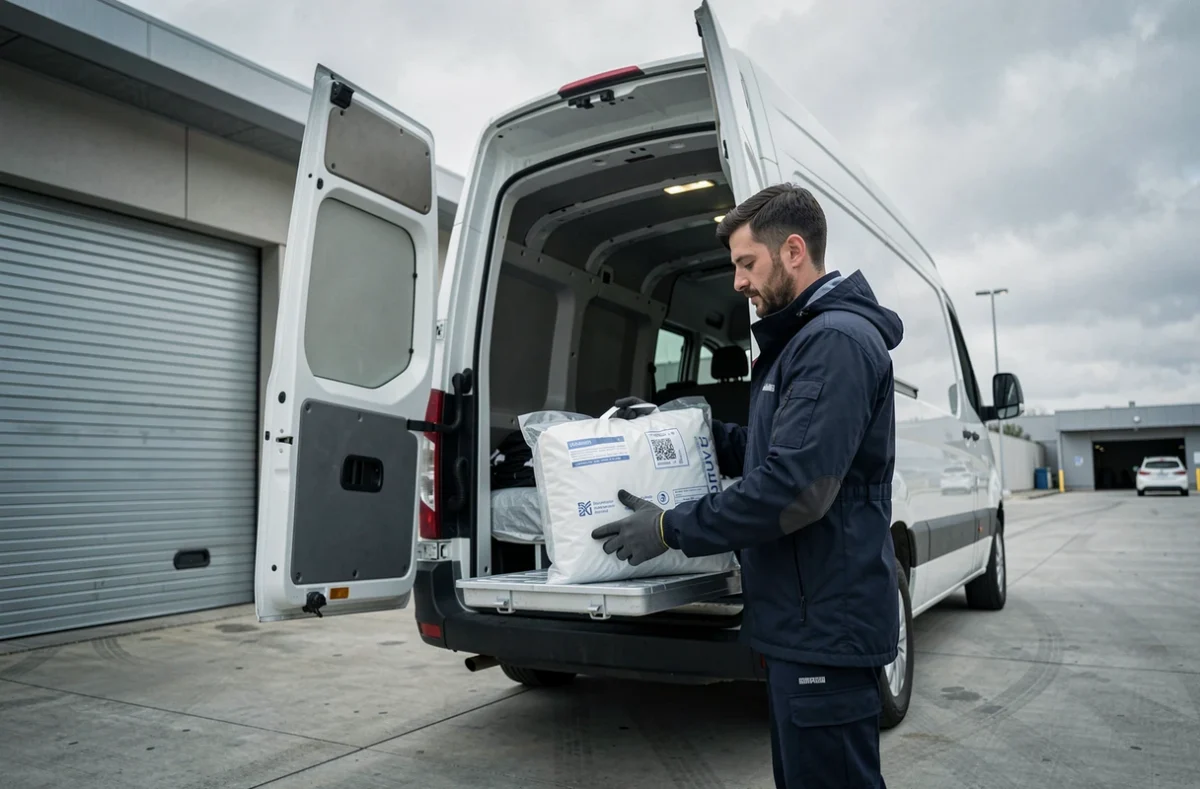
Why does this point deserve your attention? Because it is during these transitions that storage conditions deteriorate most easily. A box of vaccines unloaded on an unair-conditioned dock, even for twenty minutes, experiences a thermal deviation that can compromise the product.
The European guidelines for good distribution practices (2013/C 343/01, published in the Official Journal of the EU on November 23, 2013) require specific vigilance regarding temperature, cleanliness, and security in transit hubs. In practical terms, this means that each transfer point must have a temperature-controlled area and a documented procedure.
To better understand the secure transport of medications with Bien et Vous, it is essential to keep in mind that the quality of the journey is determined as much by the transitions as by the vehicle itself.
Temperature Control: Reliable Sensors Above All
Monitoring temperature during pharmaceutical transport is not just about sticking a thermometer in a box. The reliability of the measurement depends on several factors that many underestimate.
Calibration and Thermal Mapping
The same European guidelines specify that monitoring equipment must be calibrated regularly according to documented protocols. A sensor that drifts by a few tenths of a degree can provide false assurance for weeks.
Thermal mapping complements the system. It involves measuring temperature at multiple points in a space (truck, warehouse, container) to identify hot and cold zones. This mapping must take seasonal variations into account: a refrigerated vehicle does not behave the same way in January as it does in July.
What This Changes in Practice
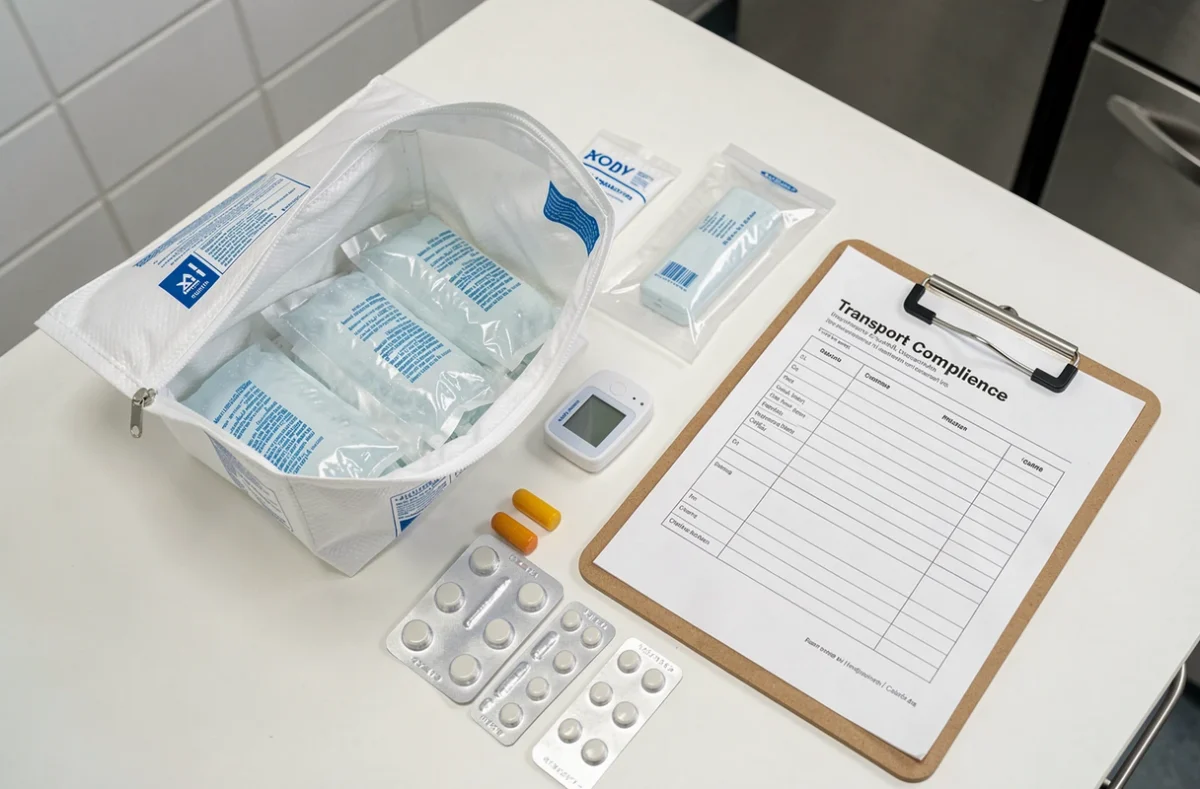
You may have noticed the small data loggers slipped into the packages of certain medications? These devices, called data loggers, continuously record temperature. Their reading upon arrival can prove that the product has never left the required storage range.
Without this proof, an entire batch can be declared non-compliant and destroyed, even if the medication remained in good condition. Thermal traceability protects both the patient and the transporter’s budget.
Digital Traceability of Medications: Towards Unit Verification
Traceability is not just about temperature. It also applies to the identity of each box of medication that circulates within the supply chain.
In the United States, the FDA has established traceability requirements under the Drug Supply Chain Security Act (DSCSA), with staggered implementation periods for certain provisions. The global trend is moving towards verification at the level of each individual box, not just the batch.
For a transporter or pharmacist, this means having compatible scanning tools and software capable of communicating with national or European verification databases.
- Each box receives a unique identifier during manufacturing, associated with a lot number and an expiration date.
- At each point in the chain (wholesaler, distributor, pharmacy), the identifier is scanned to confirm the authenticity of the product.
- Any anomaly (unknown code, duplicate, product already dispensed) triggers an alert and blocks distribution.
Pharmaceutical Responsibility During Transport: Who Is Responsible for What
A point often unclear for non-specialists: the fact that a medication physically leaves a warehouse does not automatically transfer responsibility to the transporter. The transport remains under pharmaceutical responsibility even outside the establishment.
The transfer of responsibility between actors (laboratory, distributor, transporter, pharmacy) must be organized and documented explicitly. Each participant must know precisely when they take on the compliance of the product and when they pass it on.
In practice, this involves detailed contracts specifying:
- The temperature ranges to be respected for each type of product transported.
- The procedures in case of an incident (refrigeration system failure, accident, prolonged delay).
- The proof modalities (temperature records, signed delivery slips, timestamping of steps).
- The qualified person responsible at each stage of the chain.
This documentary requirement may seem burdensome. However, it is the only guarantee that a medication arriving at its destination is genuinely compliant with the conditions of its marketing authorization.
The secure transport of medications relies on technical details that, taken in isolation, seem simple: a well-calibrated sensor, an air-conditioned transit dock, a barcode scanned at each step. It is the rigorous sequence of these actions that guarantees the quality of the final product. Any break in this chain, even brief, is enough to render a treatment ineffective or dangerous.