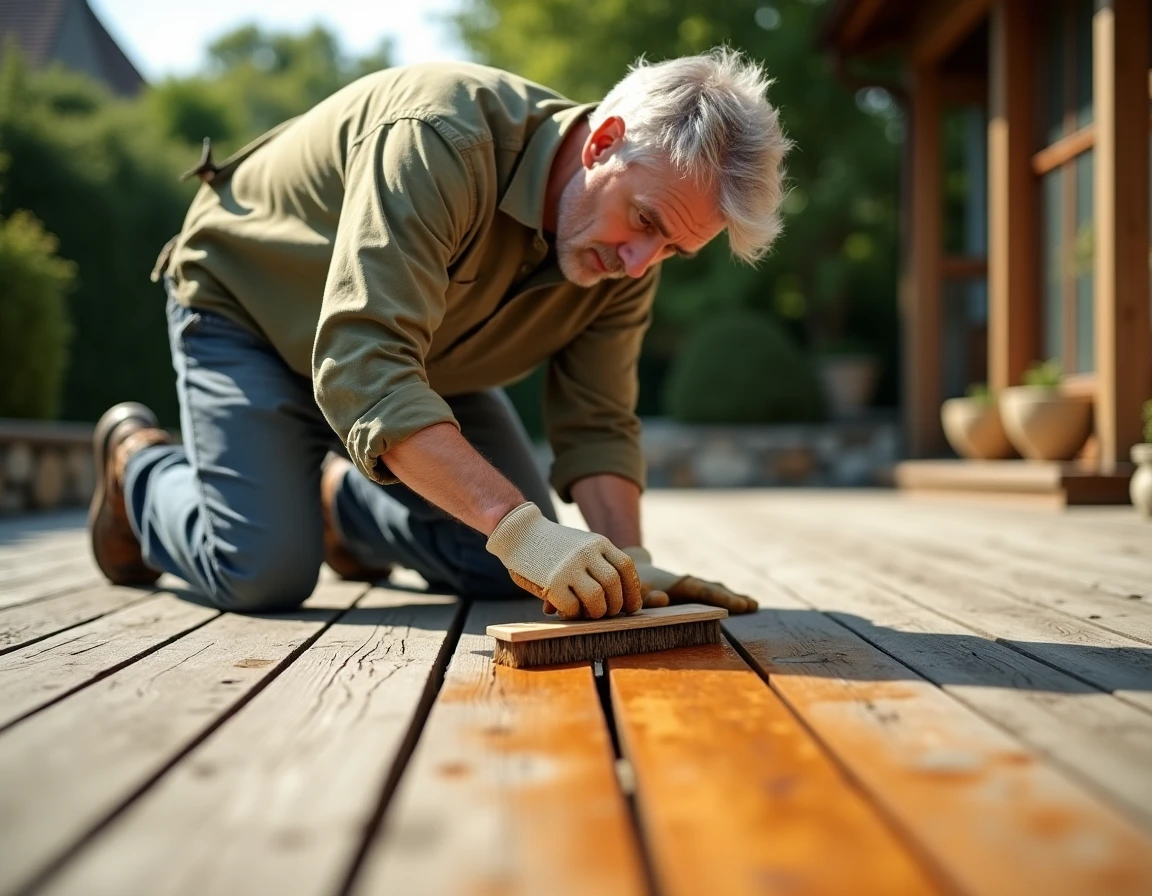
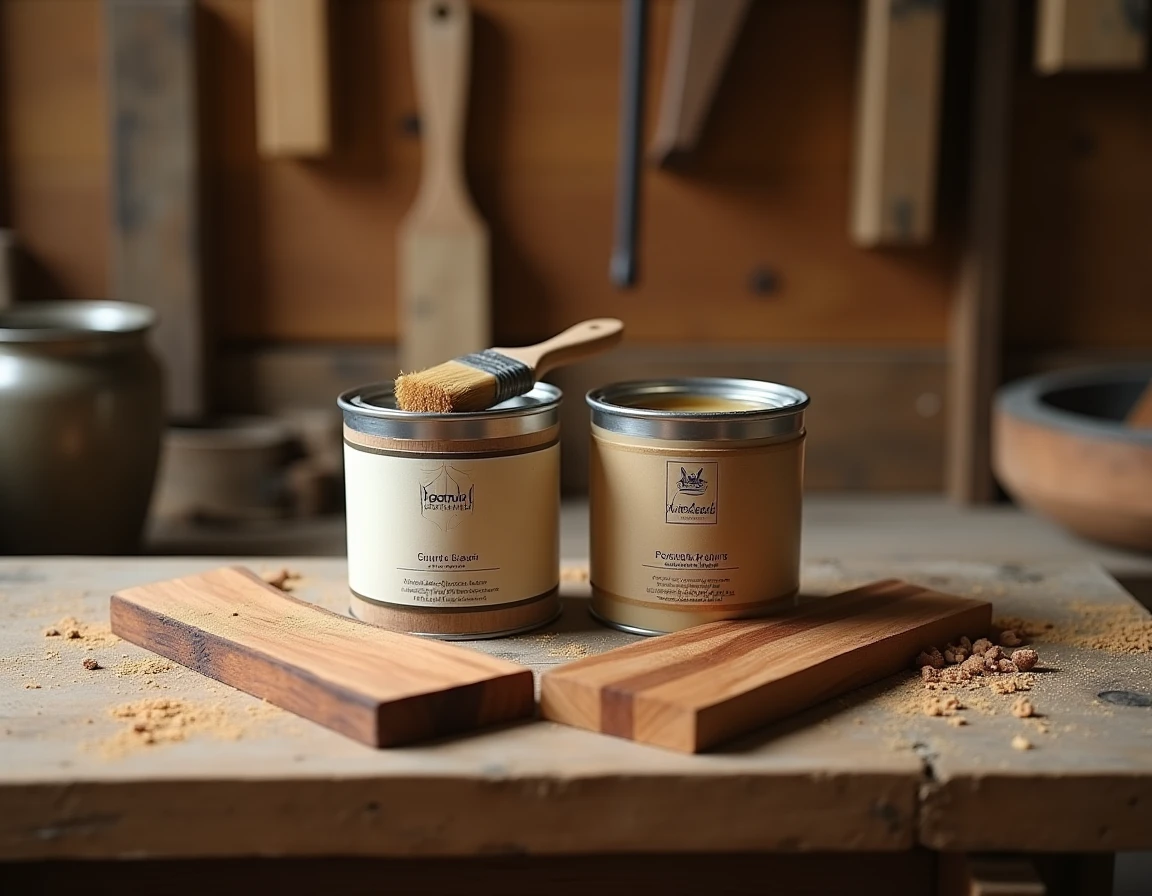
A saturator penetrates the fibers of the wood without forming a surface film. A stain leaves a semi-transparent protective film that remains visible to the touch. Everything else, durability, maintenance, aesthetic appearance, stems from this mechanical distinction between impregnation and film formation.
Protective film or impregnation: the mechanism that conditions everything else
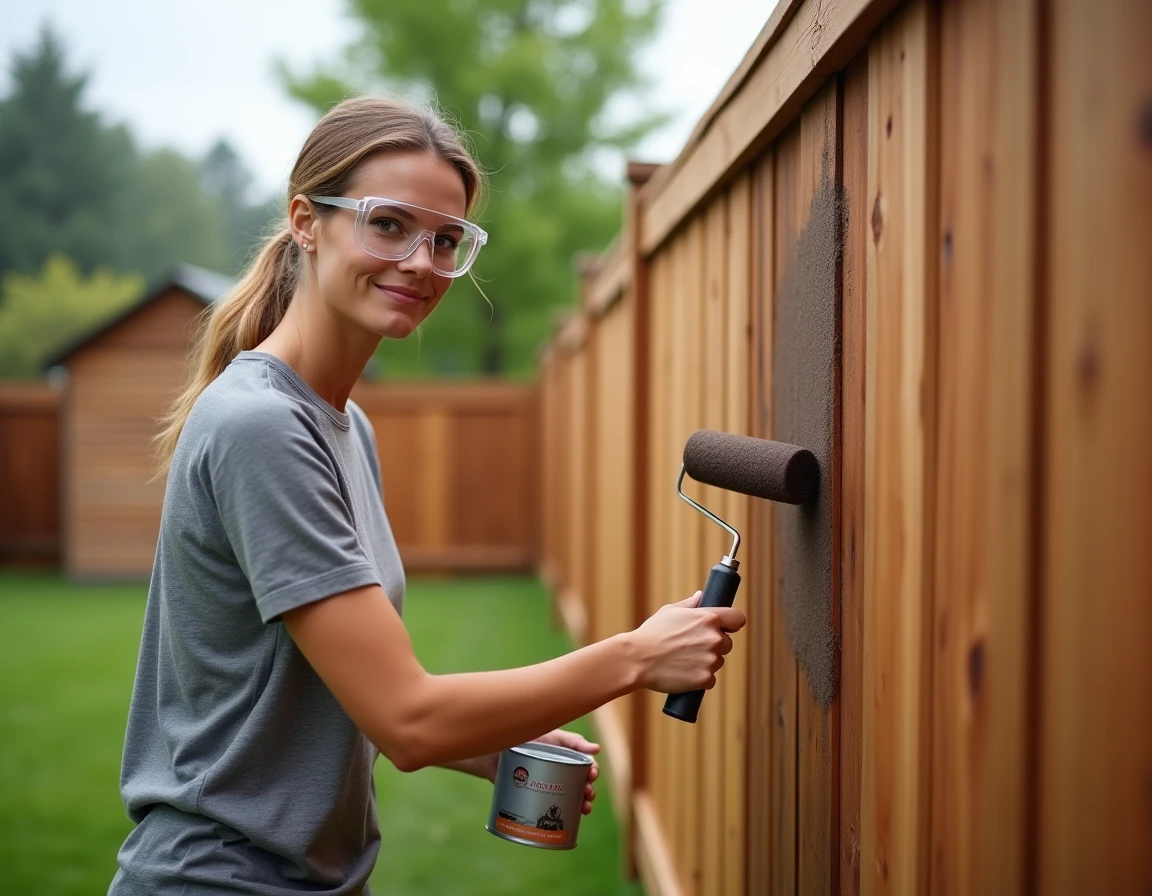
The stain is a film-forming product: it creates a thin layer on the surface of the wood. This film blocks some UV rays and prevents water from penetrating directly. The grain remains visible under the film, but to the touch, the surface is slightly satin, sometimes almost glossy depending on the chosen formulation.
The saturator works in the opposite way. It infiltrates the fibers, saturating them with oils or resins, and leaves no perceptible film. The wood retains its raw feel. The protection acts from the inside: the saturated fibers absorb less water and resist graying better.
To understand the difference between saturator and stain for wood, one must start from this mechanism. A film degrades through flaking and cracking. An impregnation degrades through gradual wear, without a film that peels off. This mode of aging radically changes the way we maintain wood over time.
Aging and maintenance of treated wood: stain versus saturator
A stain ages by forming micro-cracks in its film. On a south-facing cladding, these cracks allow moisture to pass under the protective layer. Water becomes trapped between the film and the wood, which accelerates darkening and promotes fungi.
Before renewing a stain, it is necessary to sand or strip the existing layer to restore an adherent surface. On a horizontal terrace exposed to rain and foot traffic, this operation becomes tedious.
The saturator, on the other hand, wears evenly. It does not flake. Renewal can be done without prior sanding: a cleaning of the surface, possibly a graying treatment if the wood has grayed, followed by a new layer applied directly. On very exposed horizontal surfaces (terraces, pool decks), this ease of maintenance represents a concrete advantage.
In return, the saturator needs to be renewed more often than a good quality stain. On a terrace exposed to the elements, an annual refresh is common. A well-applied stain on a vertical cladding can last several years before showing visible signs of wear.
Wood supports and orientation: adapting the finishing product to the context
The choice between these two protections depends less on personal taste than on the configuration of the support.
- Horizontal surfaces (terraces, coping stones, garden furniture) are subjected to standing water and direct UV rays continuously. A saturator is preferable here because its maintenance does not require stripping, and because a stain film on a horizontal floor degrades much faster than on a vertical surface.
- Vertical surfaces (cladding, shutters, gates) naturally shed rainwater. The stain holds better there and offers more durable UV protection thanks to its film. Sanding for renewal remains manageable on a shutter or a cladding panel.
- Hard or exotic woods with tight pores (ipe, cumaru, teak) have difficulty absorbing a standard saturator. A stain formulated for dense woods, or a specific high-penetration saturator, will be necessary. Application on exotic wood without appropriate preparation often yields mediocre results, regardless of the product.
Composition and regulation: the shift towards water-based products
Saturators and stains are available in solvent-based and water-based formulations. For several years, water-based formulations have made significant progress in the market, influenced by the European directive 2004/42/EC which caps the levels of volatile organic compounds (VOCs).
Bio-sourced ranges based on linseed, soybean, or castor oil are multiplying, especially in saturators for terraces. These products have VOC levels that are much lower than regulatory limits. For new constructions subject to RE2020 or aiming for an environmental label such as HQE, water-based products are becoming the default choice.
European Regulation No. 528/2012 on biocidal products has also changed the game. Several fungicidal and insecticidal molecules previously included in stains and saturators have been restricted or removed. Protection against fungi and wood-destroying insects is therefore often more limited than before in the finishing product itself. A separate preservation treatment (autoclave, base treatment) becomes necessary upstream, especially for woods in use class 3 or 4.
Comparative table: saturator and stain summarized
| Criterion | Saturator | Stain |
|---|---|---|
| Mechanism | Impregnation in the fibers | Protective film on the surface |
| Touch after application | Raw wood, matte | Satin, slightly filmed |
| Preferred supports | Terraces, horizontal surfaces | Cladding, shutters, vertical surfaces |
| Maintenance | No sanding, frequent renewal | Sanding necessary, spaced renewal |
| Aging | Gradual wear, no flaking | Micro-cracks then possible flaking |
| Market trend | Strong bio-sourced offer, water-based | Water-based on the rise |
The ideal product does not exist outside of a specific context. A pressure-treated pine terrace requires a regularly renewed saturator. A north-facing douglas fir cladding holds up very well to a durable stain. The support, its orientation, and the acceptable frequency of maintenance decisively settle the debate more than any marketing argument.